A Geothermal Heat Pump (GHP), also known as a ground-source heat pump, is a highly efficient renewable energy technology that taps into the Earth’s thermal energy. Unlike traditional systems that heat or cool outside air, GHPs use the fact that just a few feet below the surface, the ground maintains a remarkably stable temperature (typically between 60°F and 80°F in Texas) year-round.
How it works
Heating: Fluid in the ground loop absorbs heat from the earth, moves it to the indoor heat pump, which concentrates the heat and distributes it throughout the building via ductwork or pipes.
Cooling: The process reverses, extracting heat from the building and releasing it into the cooler ground, which concentrates the cooled water in the pipes to the heat pump and distributes it throughout the building via ductwork or pipes.
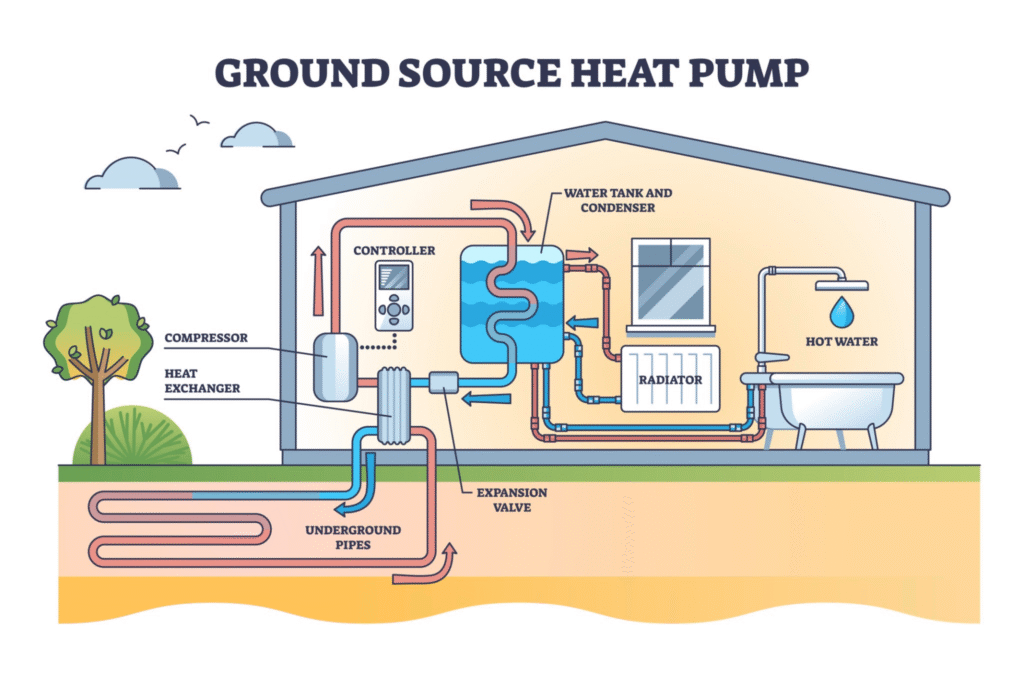
The different ways you can do Geothermal HVAC
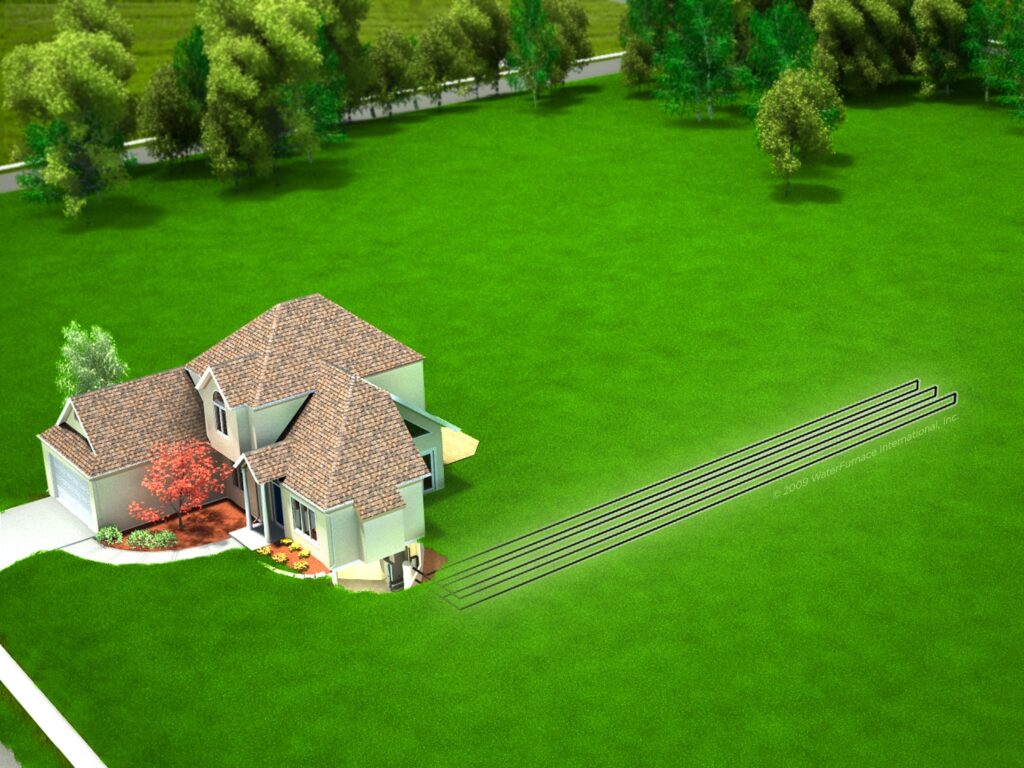
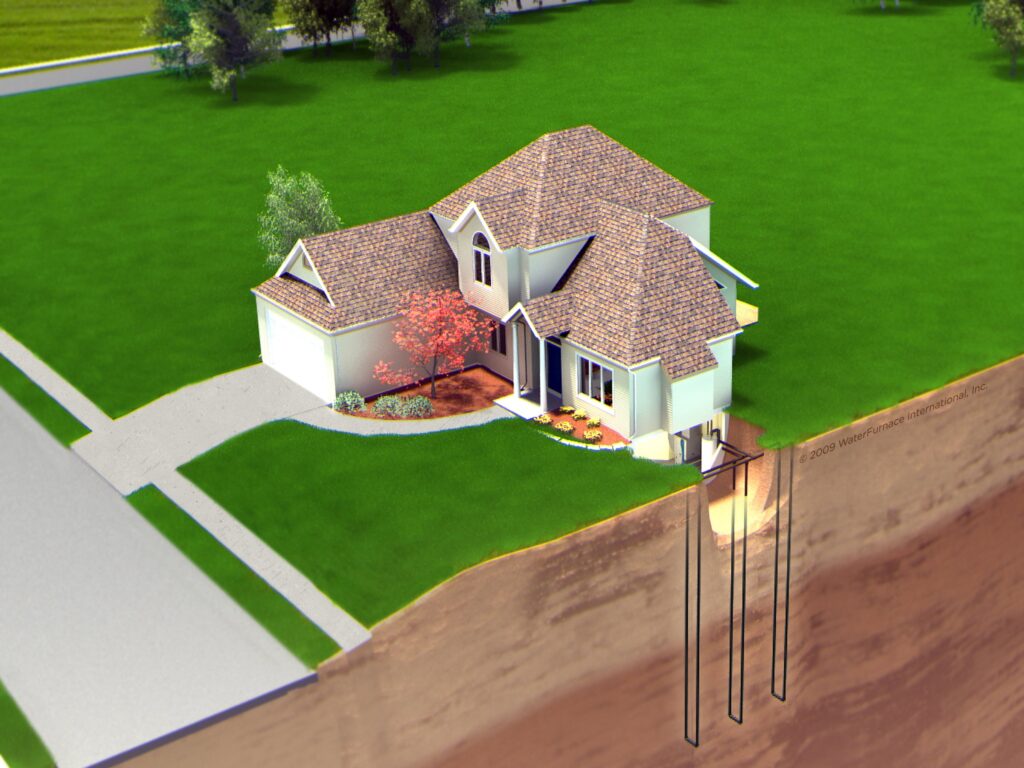
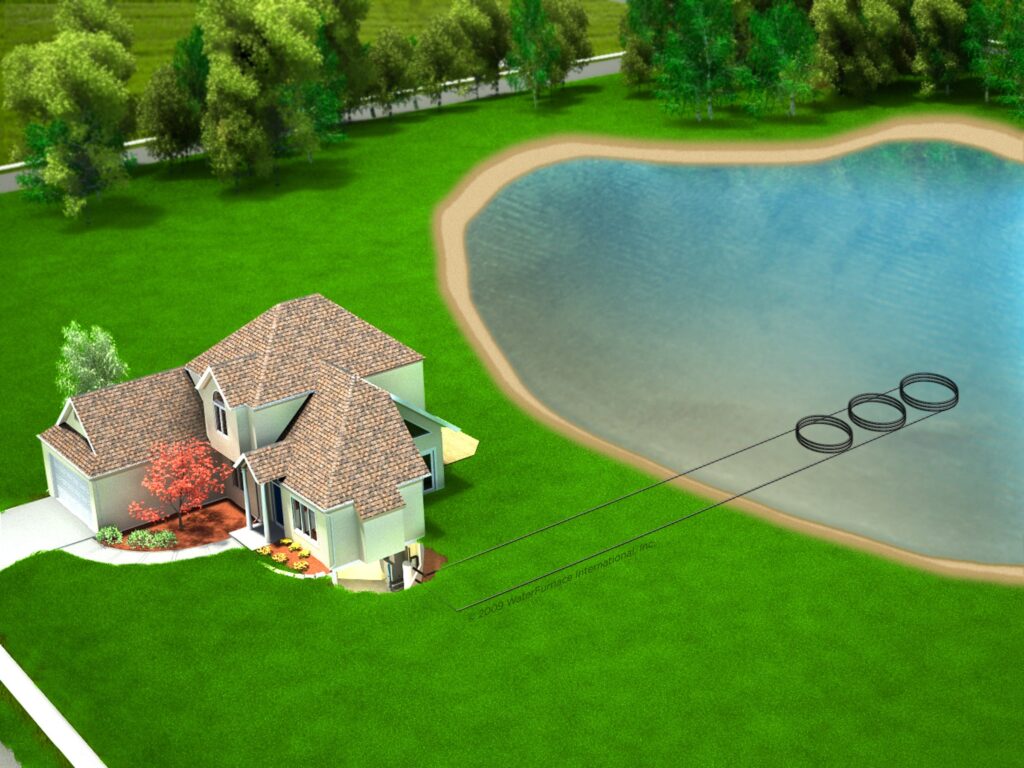
Ground Loops
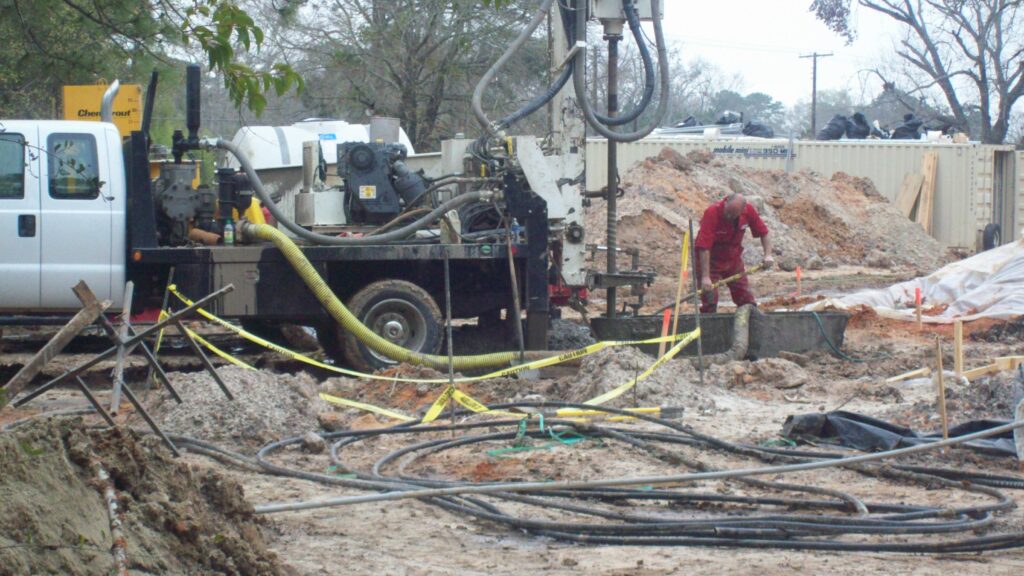
Drilling being done on a loop field to sink the pipes into the ground. The pipes are then filled with grout to hold them, some pipe is left out to connect to the supply/return pipes.
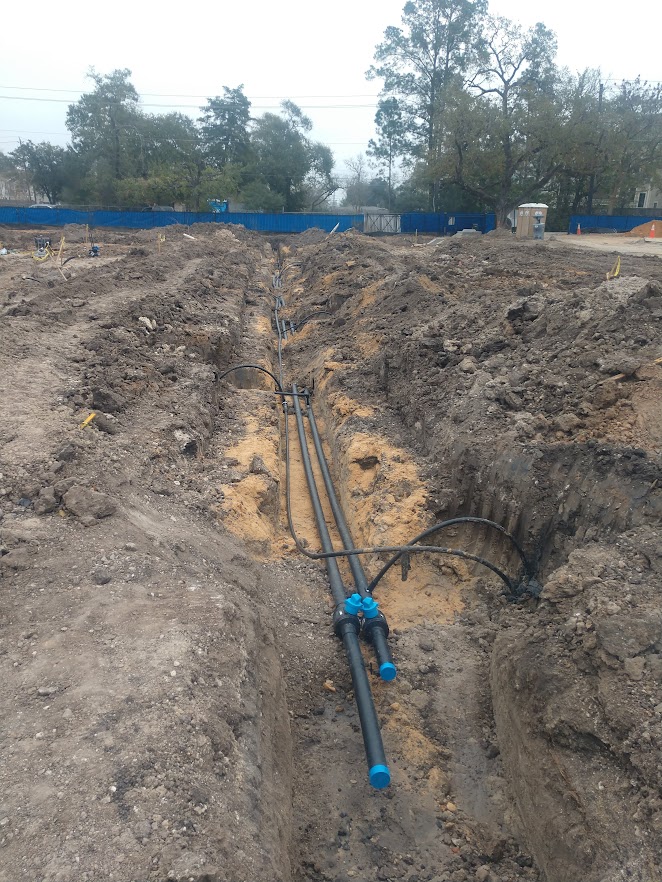
Tying in the loops to the supply and return pipes that will lead to the heat pump unit, allowing water to flow to and from the unit to heat or cool the home.
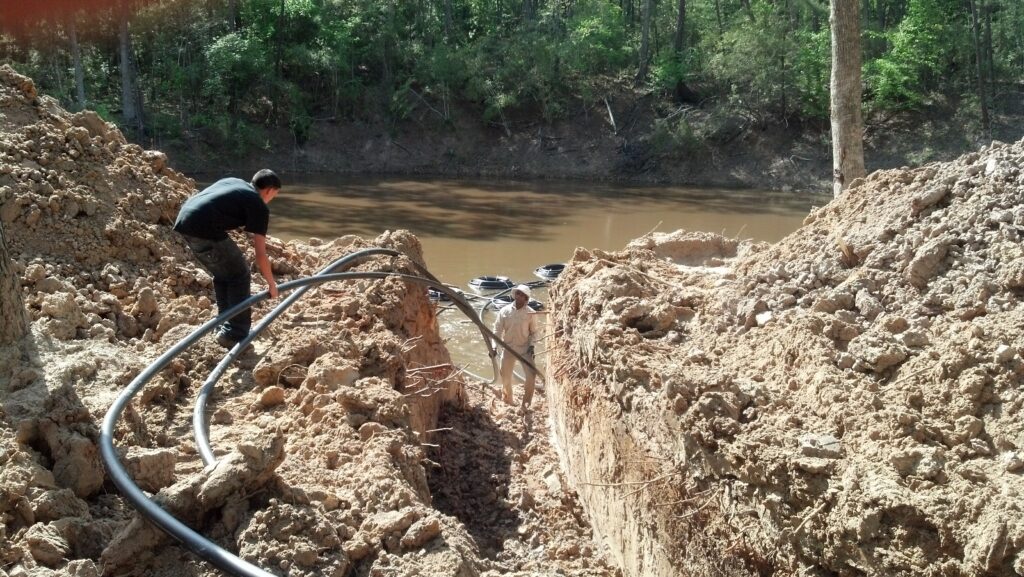
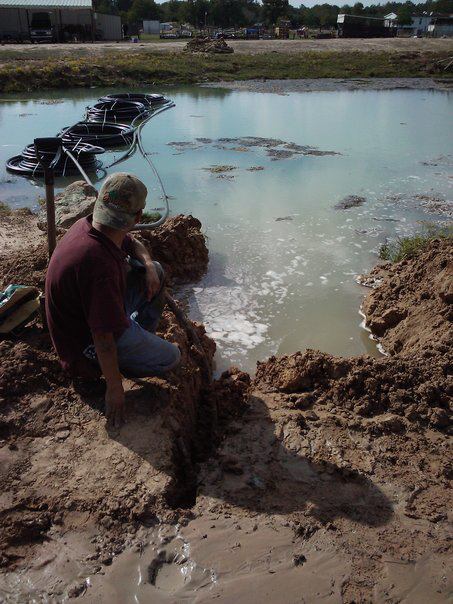
A pond loop being laid into the trench, buried, and then sunk into the pond. The pipes that are sunk into the trench lead to the heat pump unit to heat or cool.